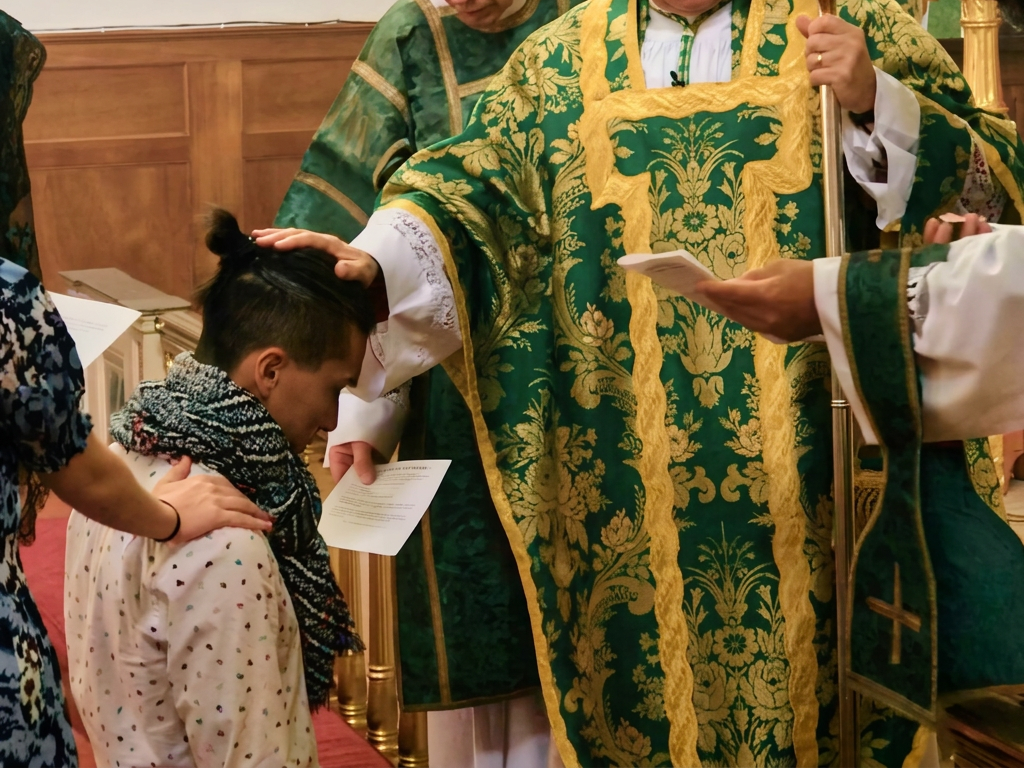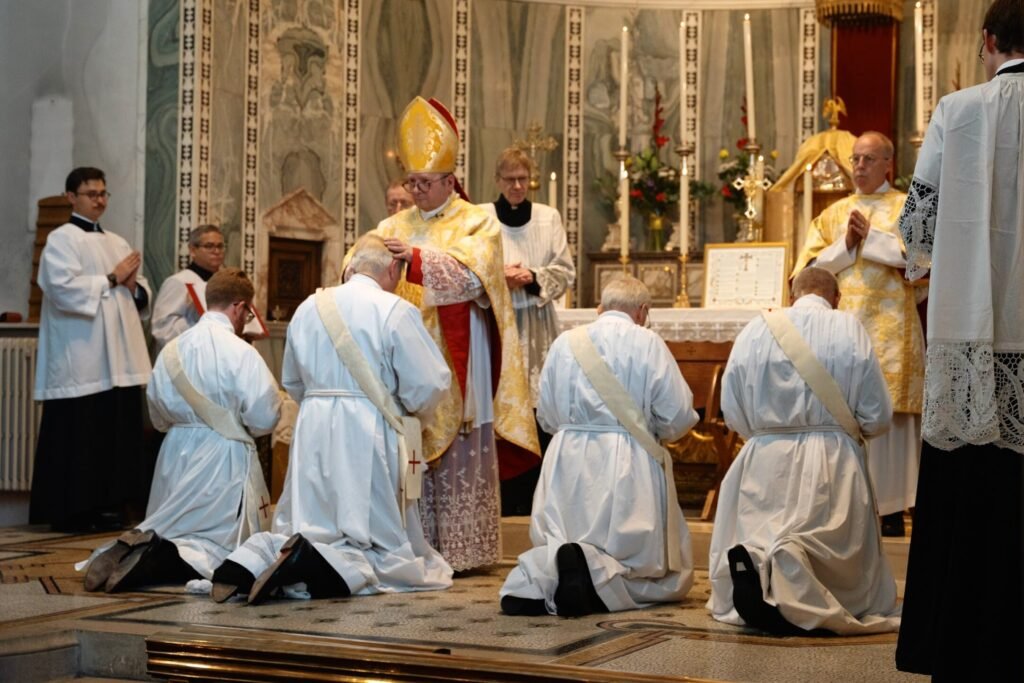
Through the Sacrament of Holy Orders, the apostolic ministry entrusted by Christ to his Church continues through the three orders of bishop, priest and deacon. Bishops receive the fullness of the Sacrament of Orders; priests share in their ministry as co-workers; and deacons are ordained particularly for service in the liturgy, the proclamation of the Gospel and works of charity.
Following the example of Christ, who chose men as his Apostles, and the constant tradition of the Church, God calls only men to receive the Sacrament of Holy Orders. The Catholic Church understands herself to be bound by this divine constitution and therefore does not possess the authority to confer priestly ordination upon women. Every vocation to Holy Orders begins with God’s call, which must then be discerned by the individual and by the Church.
The priesthood exists above all for the sanctification of God’s people. The priest proclaims the Gospel, celebrates the Sacrifice of the Holy Mass, forgives sins in the Sacrament of Penance, anoints the sick and accompanies the faithful through the joys and sorrows of Christian life. His ministry is not his own possession or achievement, but a gift entrusted to him for the service of Christ and his Church.
The history of the Ordinariate gives Holy Orders a distinctive dimension. Many of its priests previously exercised ministry as Anglican clergy before entering into full communion with the Catholic Church and subsequently being ordained as Catholic deacons and priests. The Ordinariate thus bears particular witness both to the continuity of Christian vocation and to the gift and necessity of Catholic Holy Orders within the apostolic communion of the Church.
Explore other sacraments