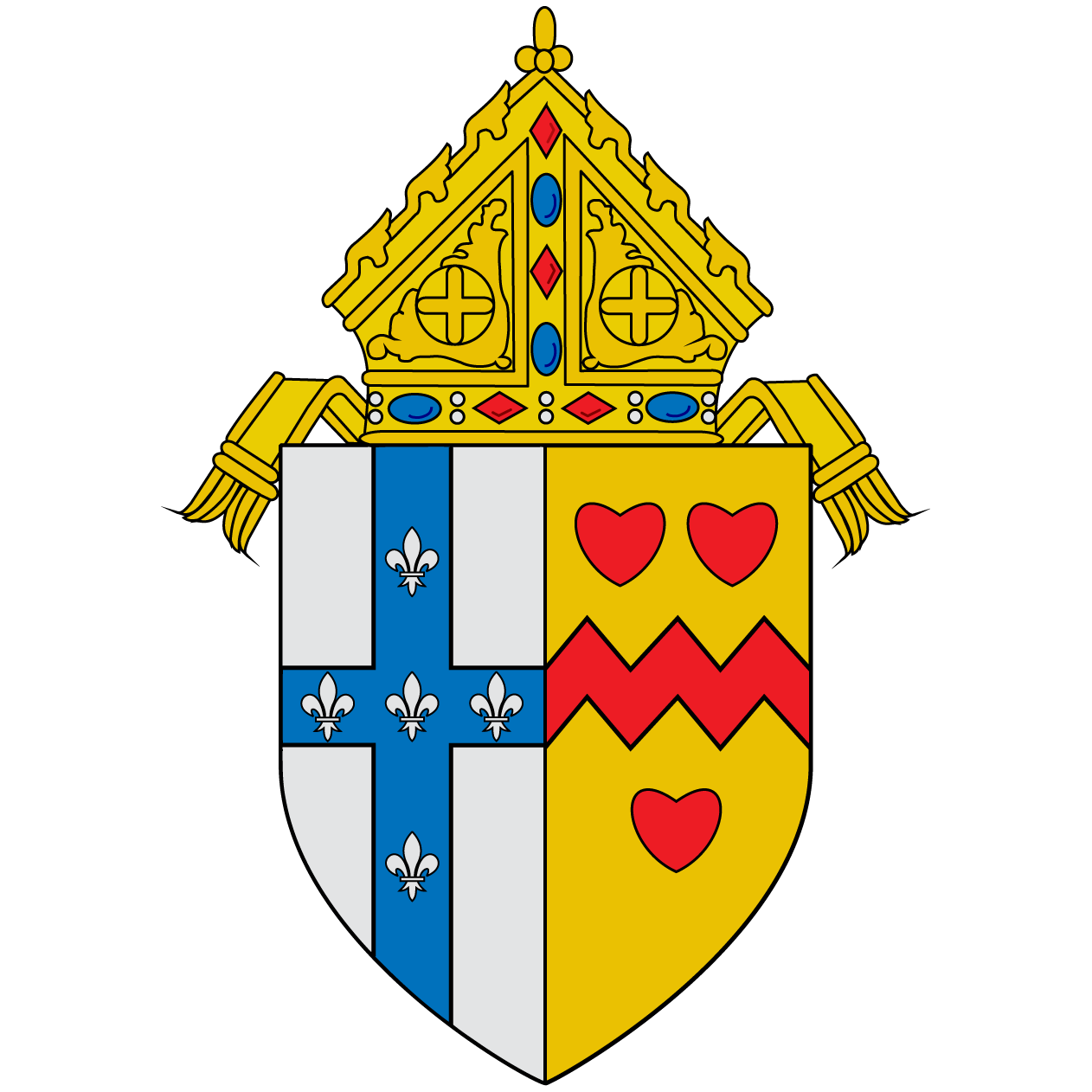
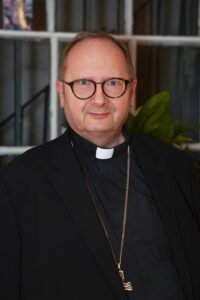
Bishop David Arthur Waller
The Personal Ordinariate of Our Lady of Walsingham is led by Bishop David Waller, its Ordinary and the first bishop to lead the Ordinariate. He was appointed by Pope Francis as the second Ordinary, succeeding Monsignor Keith Newton, who had led the Ordinariate from its establishment by Pope Benedict XVI in 2011.
Bishop David was himself an Anglican priest before being received into the full communion of the Catholic Church. He was ordained to the Catholic priesthood in 2011 and served the Ordinariate in a number of pastoral and leadership roles. Following his appointment as Ordinary, he was ordained bishop at Westminster Cathedral on 22 June 2024, the Feast of Saints John Fisher and Thomas More. The principal consecrator was Cardinal Víctor Manuel Fernández, Prefect of the Dicastery for the Doctrine of the Faith.
The appointment of a bishop from among the Ordinariate’s own clergy was an important moment in its development. Bishop David therefore shares personally in the journey which lies at the heart of the Ordinariate: having received the riches of the Anglican tradition, he brought that heritage with him into the full communion of the Catholic Church.
Although the Ordinariate is not a territorial diocese, its structure resembles that of a diocese in many important respects. The Ordinary has responsibility for its clergy, faithful, pastoral life and mission. Because membership of the Ordinariate is personal rather than territorial, his pastoral responsibility extends to Ordinariate communities and members living across Great Britain.
An important and distinctive part of its governance is the Governing Council, consisting principally of priests of the Ordinariate. It assists the Ordinary in the government of the Ordinariate and reflects the particular canonical structure established for the Personal Ordinariates.
The Bishop is also assisted by the Curia, which includes the Vicar General, other Vicars where appropriate, the Chancellor and Financial Administrator. Together they assist with the day-to-day pastoral, canonical and administrative life of the Ordinariate.
The voice of the lay faithful also forms an important part of this structure. Pastoral Councils, representing different areas of the country, provide consultation and advice concerning the pastoral life and mission of the Ordinariate.
In this way, the Ordinariate combines episcopal leadership with the participation of clergy and laity in its governance and mission, while remaining fully integrated into the life and structures of the Catholic Church.