Worship lies at the heart of the life of the Ordinariate. Our liturgical tradition is fully Catholic, while preserving and sharing those elements of Anglican worship which are compatible with the Catholic faith and which the Holy See has recognised as a valuable spiritual patrimony.
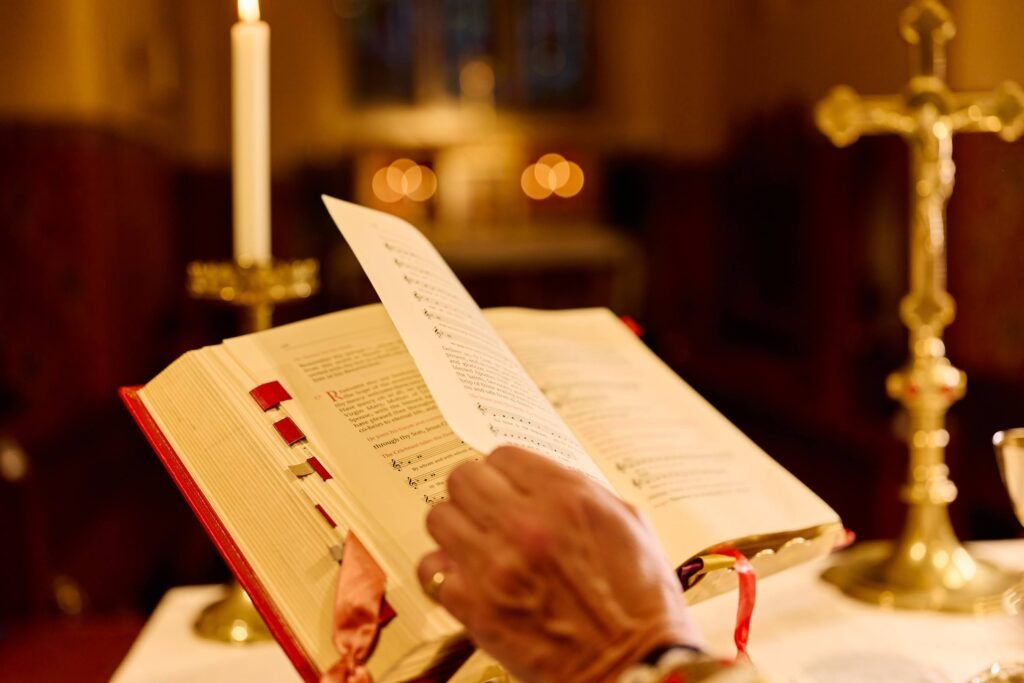
The distinctive liturgical provision created for the Ordinariates is known as Divine Worship. It draws upon centuries of English Christian prayer and the Anglican liturgical tradition, incorporating its characteristic language, reverence, music and strong scriptural foundations into the worship of the Catholic Church. Its texts have been adapted and specifically approved by the Holy See and form an authorised expression of the Roman Rite. Ordinariate priests may also celebrate Mass according to the other approved liturgical forms of the Roman Rite.
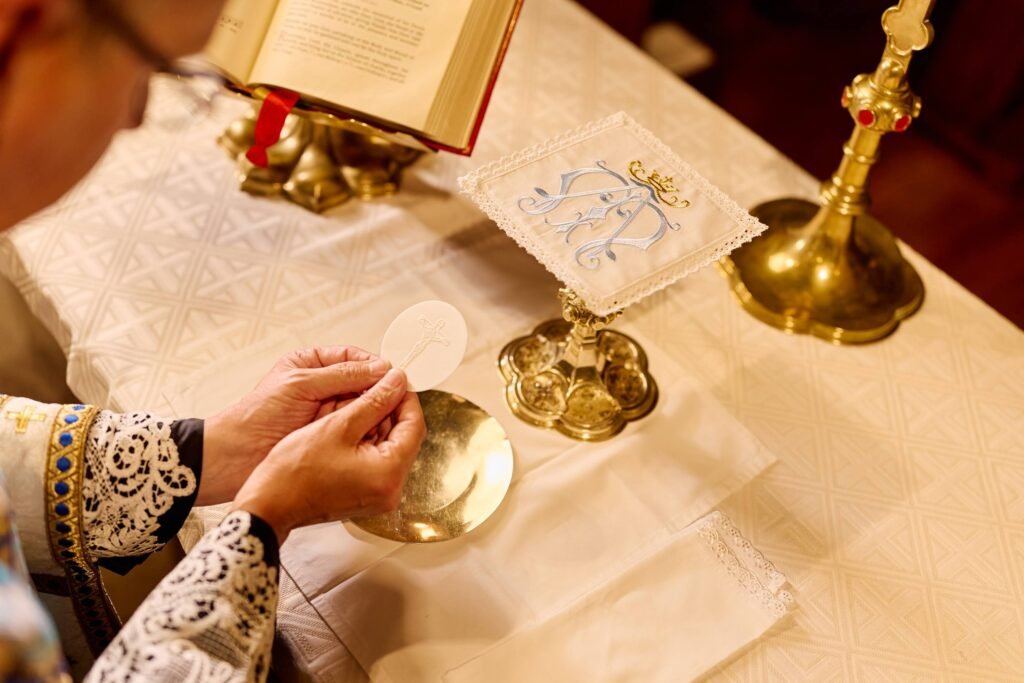
At the centre of our worship is the Sacrifice of the Holy Mass, the Eucharist, in which Christ is truly and substantially present under the appearances of bread and wine and his one sacrifice upon the Cross is made sacramentally present upon the altar. Divine Worship: The Missal expresses these central mysteries of the Catholic faith in a particularly rich and beautiful form of liturgical English, drawing upon the language of the Book of Common Prayer, the English Missal tradition and other sources from the Anglican patrimony.
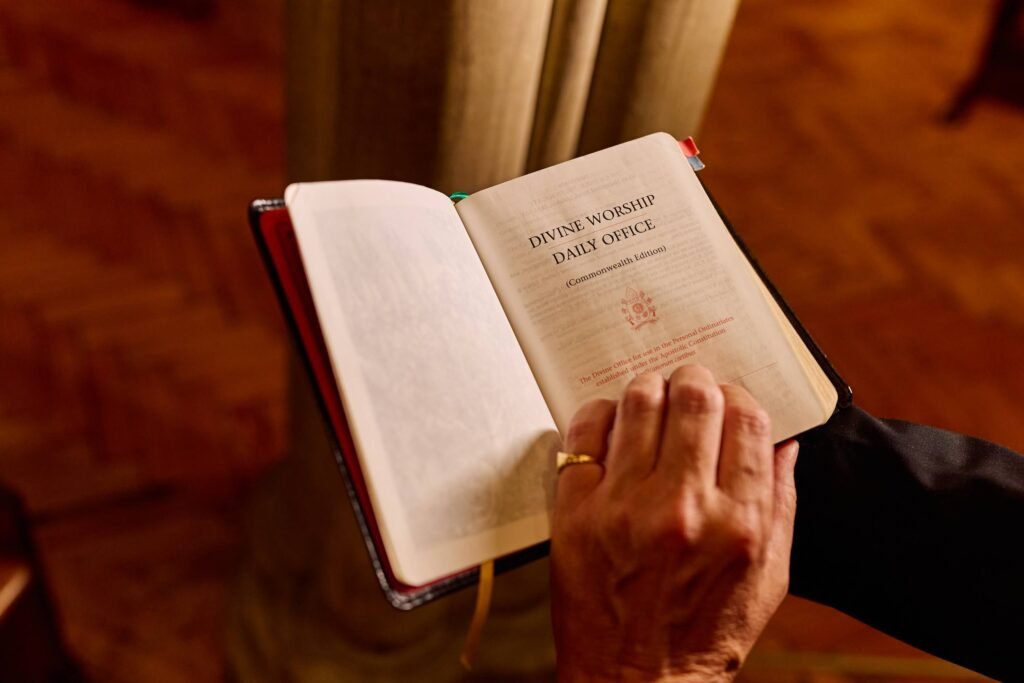
The Daily Office also occupies an important place in Ordinariate spirituality. The celebration of Mattins and Evensong, together with Compline, brings into Catholic life one of the great treasures of the Anglican tradition. Clergy and lay people are encouraged, whenever possible, to pray the Office together, although it may equally be prayed privately. The approved Divine Worship: Daily Office provides the Ordinariate with its own form of this ancient daily prayer of the Church.
Sacred music naturally forms an important part of this inheritance. The English traditions of psalmody, hymnody, plainsong and choral music help to give Ordinariate worship its distinctive character. Music is not simply an embellishment of the liturgy, but serves prayer and the worship of God, drawing us more deeply into the sacred mysteries we celebrate.
The purpose of Divine Worship is not to preserve a historical curiosity or to recreate Anglican worship within the Catholic Church. Rather, the Ordinariate has received these traditions into the fullness of Catholic life and offers them as a living contribution to the worship and mission of the Church.
In this way, our liturgy expresses something fundamental about the Ordinariate itself: a heritage received through Anglicanism, brought into the full communion of the Catholic Church, and now offered as a gift to the whole Church.